
What is Shirodhara?
Among all traditional Ayurvedic treatments, Shirodhara is perhaps one of the most recognised. Its distinctive method has made it well known far beyond the world of Ayurveda.
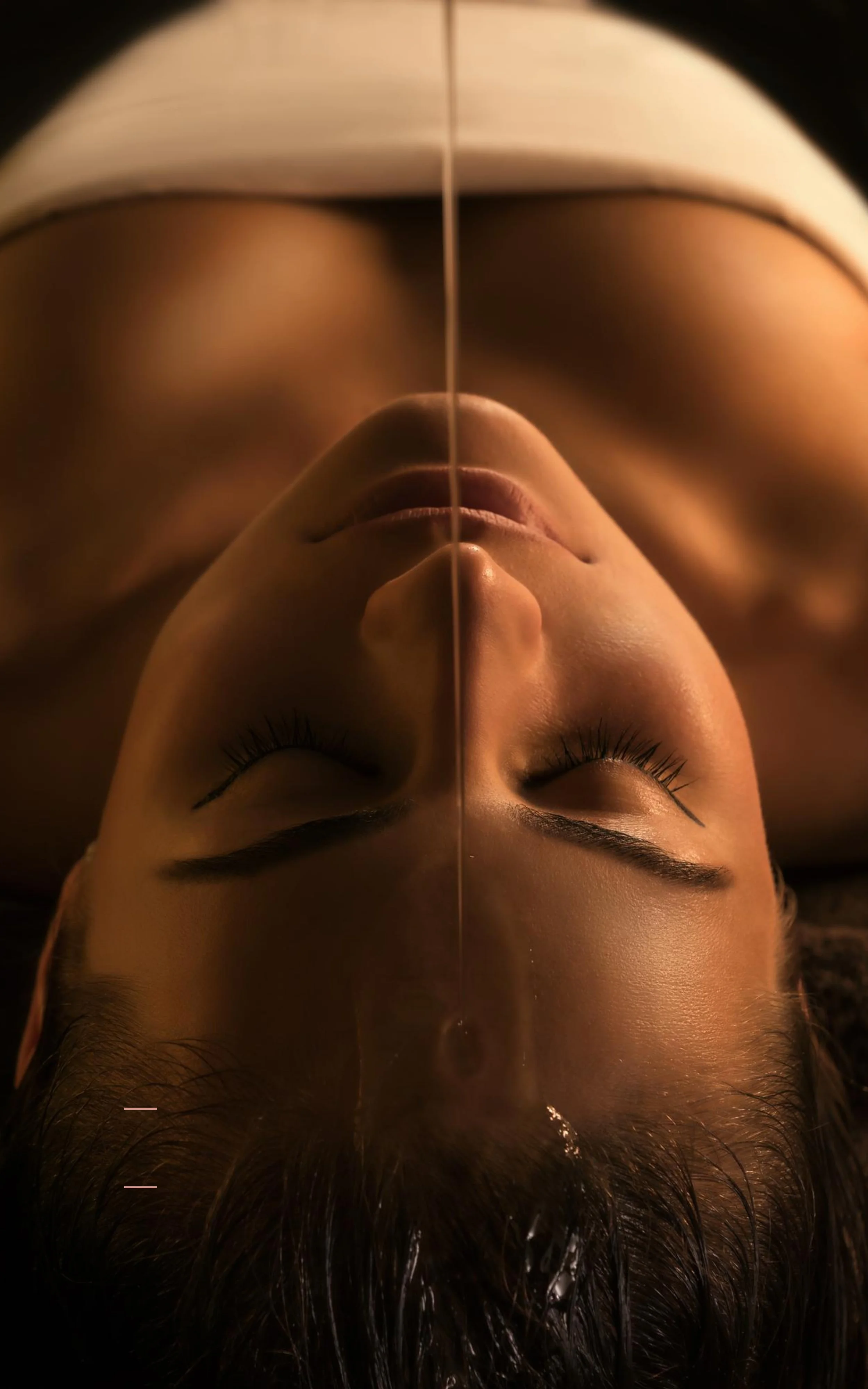
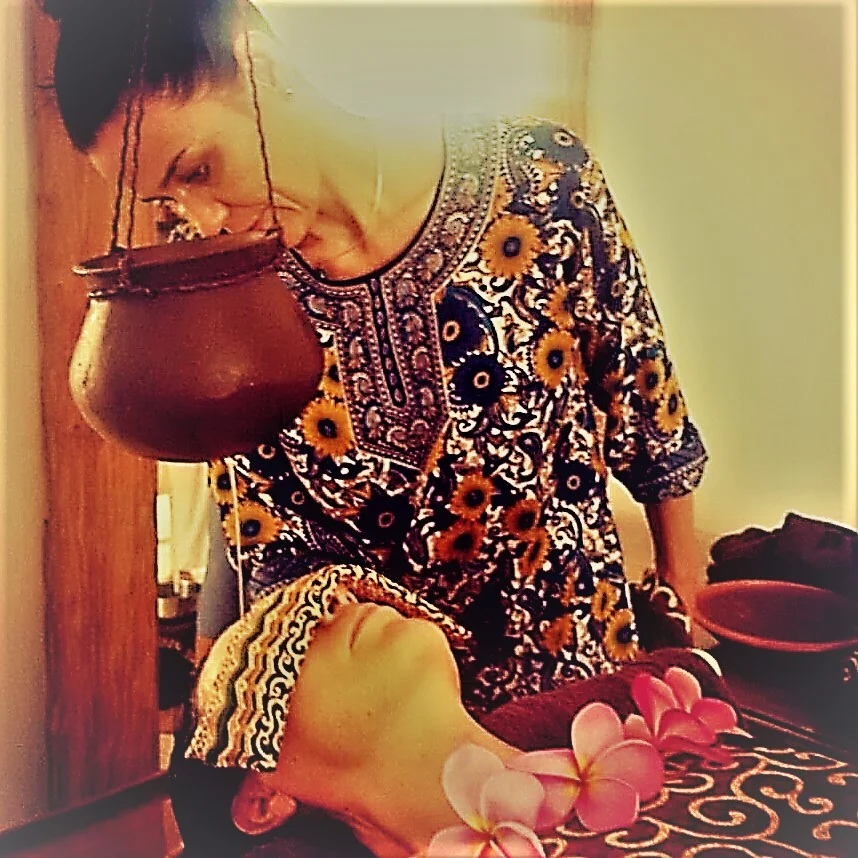
The word Shirodhara comes from Sanskrit. "Shiro" refers to the head, while "Dhara" means a continuous flow. Traditionally, the treatment involves a gentle stream of warm oil being poured in a steady rhythm onto the forehead over a period of time.
For centuries, Shirodhara has been described in classical Ayurvedic texts as one of several supportive treatments that may be used within a personalised Ayurvedic program. The exact choice of oils, duration and frequency traditionally depend on the individual and the overall Ayurvedic approach being followed.
Because of its unique appearance, Shirodhara has often become one of the symbols of Ayurveda itself. However, it is important to understand that it is not intended as a standalone solution or a universal treatment. In traditional Ayurveda, it is considered as one possible element within a much broader and individual approach.
Many people associate Shirodhara with deep relaxation because of the calm and peaceful environment in which it is usually performed. This has contributed to its popularity around the world and made it one of the most widely recognised Ayurvedic experiences.
Learning about Shirodhara also helps illustrate an important principle of Ayurveda: rather than focusing on a single treatment, Ayurveda traditionally combines different elements according to the needs of each individual.
Understanding Shirodhara is therefore not only about learning one treatment. It is also an introduction to the broader philosophy of Ayurveda and its personalised attempt.
